Clothing shipping costs in India: how to estimate each order
Estimate clothing shipping costs using packed weight, parcel dimensions, delivery route and payment method, then compare quotes with final bills.
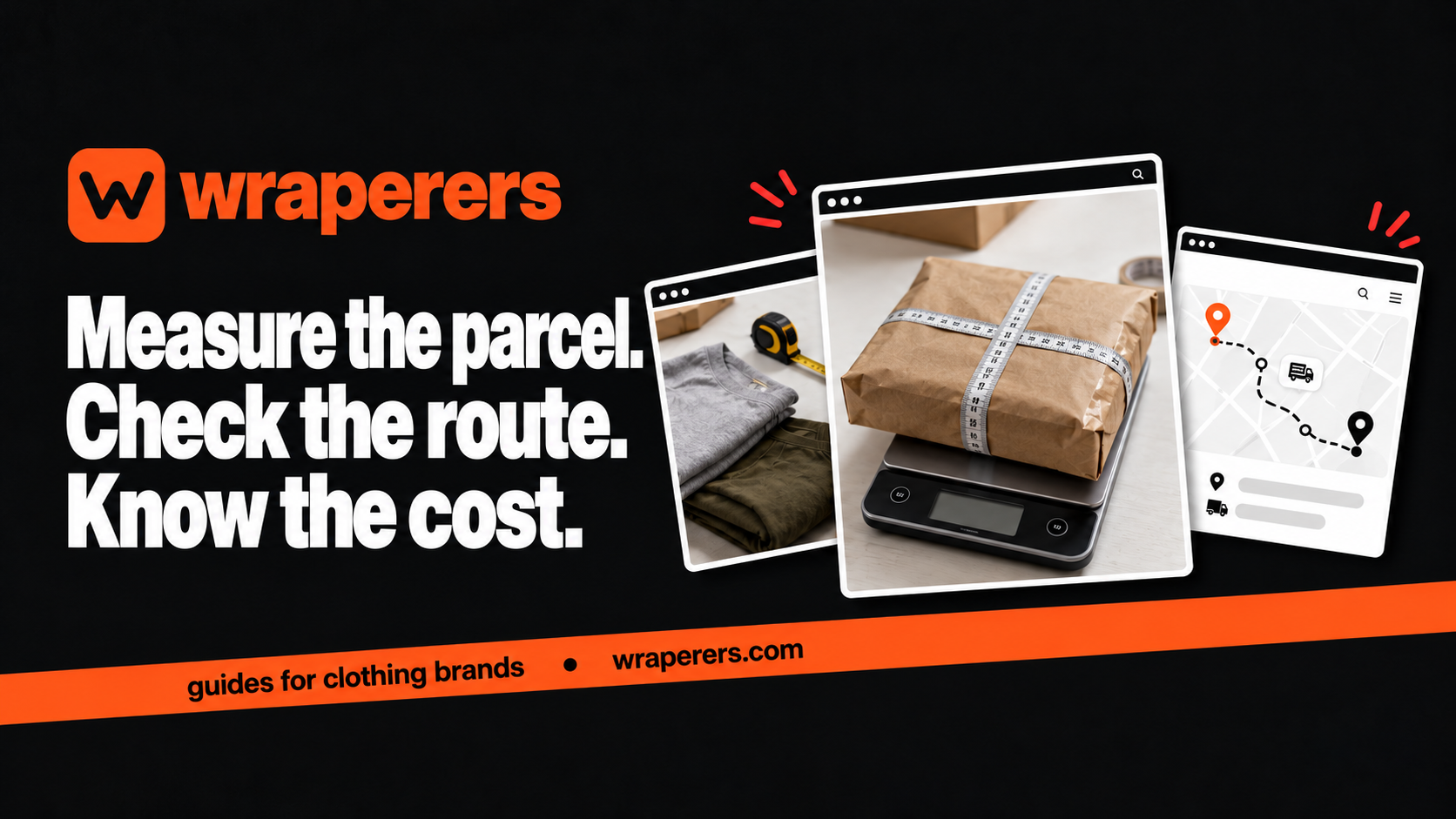
An online store made for your clothing brand: your own admin, checkout and fashion features built in.
Get started for freeGet a free homepage previewClothing shipping costs depend on the packed parcel, the route and the service you choose. Measure the final package, enter accurate pickup and delivery details, and check the charges that apply to that booking. A rate advertised for a light parcel isn't a quote for every clothing order.
For a small brand, the useful goal is a repeatable estimate rather than a guessed flat number. Build a few representative parcels and compare their estimated charges with what you are actually billed after shipping.
This article explains the operating process. It doesn't quote a current courier tariff or promise a particular delivery price.
Estimate clothing shipping costs from the packed order
Weigh the parcel after adding the garment, protective material, outer packaging and anything else that ships with it. A tee weighed on its own isn't the parcel the courier receives.
Measure the outside length, width and height of the packed order using the units required by your shipping tool. Avoid entering the dimensions of an empty mailer or an unfolded box. The finished package is the relevant item.
Shiprocket's shipping rate calculation guide recommends including parcel dimensions for a more accurate estimate. Dimensional or volumetric weight reflects the space a package occupies; the applicable billing method depends on the courier and service terms.
Don't apply a divisor found in an old blog without checking your actual booking rules. Keep the quote's assumptions alongside the estimate so you can investigate differences later.
Build a small parcel reference sheet
Prepare a few common combinations using your real garments and normal packing materials. For example, test one tee, two tees and a heavier overshirt. Use your own range rather than assuming these examples represent every brand.
| Parcel record | What to capture | Why it matters |
|---|---|---|
| Contents | Product types and quantities | Lets you repeat the estimate |
| Packed weight | Scale reading with packaging | Avoids garment-only estimates |
| Outside dimensions | Length, width and height | Supports dimensional billing checks |
| Packaging type | Mailer or box specification | Makes later changes visible |
| Route and service | Origin, destination and courier option | Keeps comparisons meaningful |
If you change packaging, remeasure the reference parcel. A larger box may protect a product differently, but it can also change the chargeable size. Compare both protection and booking cost rather than assuming that smaller is always better.
Keep the reference sheet near the packing area. It is a starting point, not permission to skip weighing unusual orders or overfilled parcels.
Compare like-for-like quotes
Use the correct pickup and delivery PIN codes and review serviceability for the order. Different routes or courier services may produce different estimates. Save the date and selected service so a later comparison has context.
Check what each quote includes. Payment method, optional services, applicable taxes and other charges may affect the amount. Read your account's current terms rather than treating two headline figures as equivalent.
For cash-on-delivery orders, look for the applicable COD charges and settlement terms. A prepaid estimate should not automatically become your COD estimate. Also understand how refused or undelivered parcels are handled under your service agreement.
Don't promise the customer a specific delivery day solely because a tool shows an estimate. Separate your own dispatch time from the courier's transit estimate and make any destination-dependent conditions clear.
Decide what the customer sees before payment
You may choose a fixed delivery charge, a calculated charge or a threshold-based offer. Each option needs a clear explanation and a check against your actual order economics. The courier's cost and the amount you charge the customer are separate figures.
For an illustrative calculation, suppose an order has ₹70 in forward shipping and ₹15 in packaging. Those two items total ₹85 before any other applicable costs. These numbers are fictional arithmetic examples, not current rates or a recommended fee.
If you charge the buyer ₹50 in that example, the remaining ₹35 still has to be covered somewhere. Don't call that difference free just because it is absent from checkout. Review it alongside the rest of the order costs.
Explain known delivery charges before the buyer pays. If the final amount is calculated at checkout, say that on the product page or shipping information page. Our product page checklist covers where that information belongs.
Reconcile estimates with actual charges
After dispatch, compare the quote, the charged amount and the parcel record. Keep the shipment reference so you can connect a difference to the right order. A monthly total on its own won't tell you which package caused the issue.
If the billed weight differs, follow the provider's current process for checking or disputing it. Keep any packing evidence your agreement requires and respond within the applicable time limits. Don't assume every difference is an error or that every dispute will be accepted.
Track failed deliveries and returns separately from forward shipping. A healthy-looking average based only on completed prepaid orders may hide costs from other outcomes. Use consistent categories when reviewing the period.
Look for patterns you can act on: a box that is routinely bigger than needed, one product combination that changes the weight slab, or an estimate entered with the wrong unit. Fix the process rather than repeatedly adjusting a spreadsheet total.
Give the packing team one clear method
Write down who measures, who books and who checks the selected courier option. Include a final check of garment variant, quantity and delivery details. A cheap shipment is still a bad outcome if the wrong item reaches the buyer.
Keep sample packing instructions for common products, but allow exceptions where protection requires them. Avoid crushing structured garments merely to fit an estimate. The customer receives the condition you pack, not the spreadsheet you prepared.
At Wraperers, shipping through Shiprocket can be booked from the orders screen, with a tracking link for the customer. Courier charges still depend on the shipment and applicable provider terms. See our services for the wider store setup.
Review a sample of recent shipments regularly and update your assumptions when the products or packaging change. Reliable estimates come from accurate inputs and completed-order checks, not from one universal shipping number.
Want to see your clothing range in a store with an organised ordering flow? Get a free homepage preview.
Frequently asked questions
Can I use the same shipping estimate for every tee order?
Does lightweight clothing always have low shipping costs?
Should I offer free shipping?
Want a store like this for your brand?
Send us your brand and we'll design your homepage for free. You only pay if you love it.
Keep reading
Affordable ecommerce website builders in India: 10 options, plus Wraperers
Compare affordable ecommerce website builders in India on billing, fees and setup work: 10 alternatives plus Wraperers for small clothing brands.

Clothing checkout testing: a practical guide before going live
Plan clothing checkout testing for sizes, stock, charges, payment outcomes and order records, using a repeatable checklist before your store goes live.

Clothing website brief: what to prepare before hiring a builder
Prepare a clothing website brief with product facts, design references, operational needs and clear responsibilities before hiring your store builder.